
Soil health and no-dig gardening workshop
Saturday 31 May 2025, 10am-12 noon
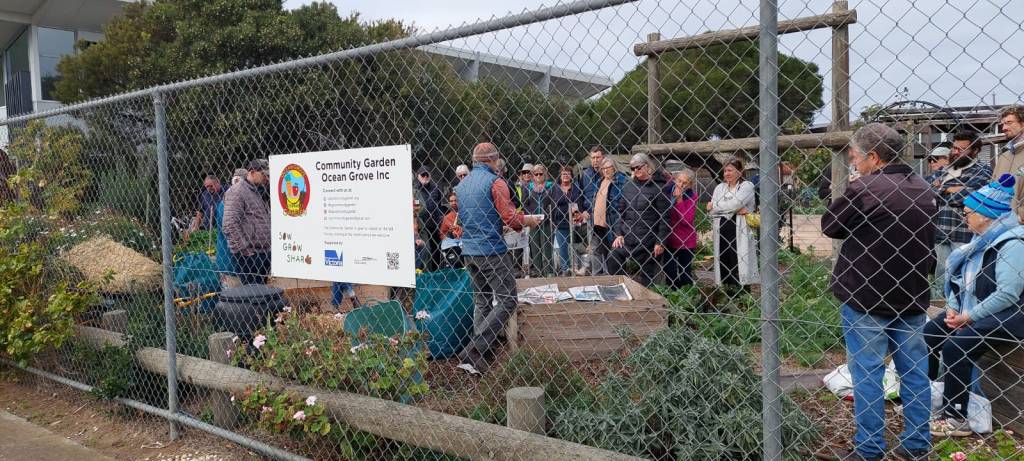
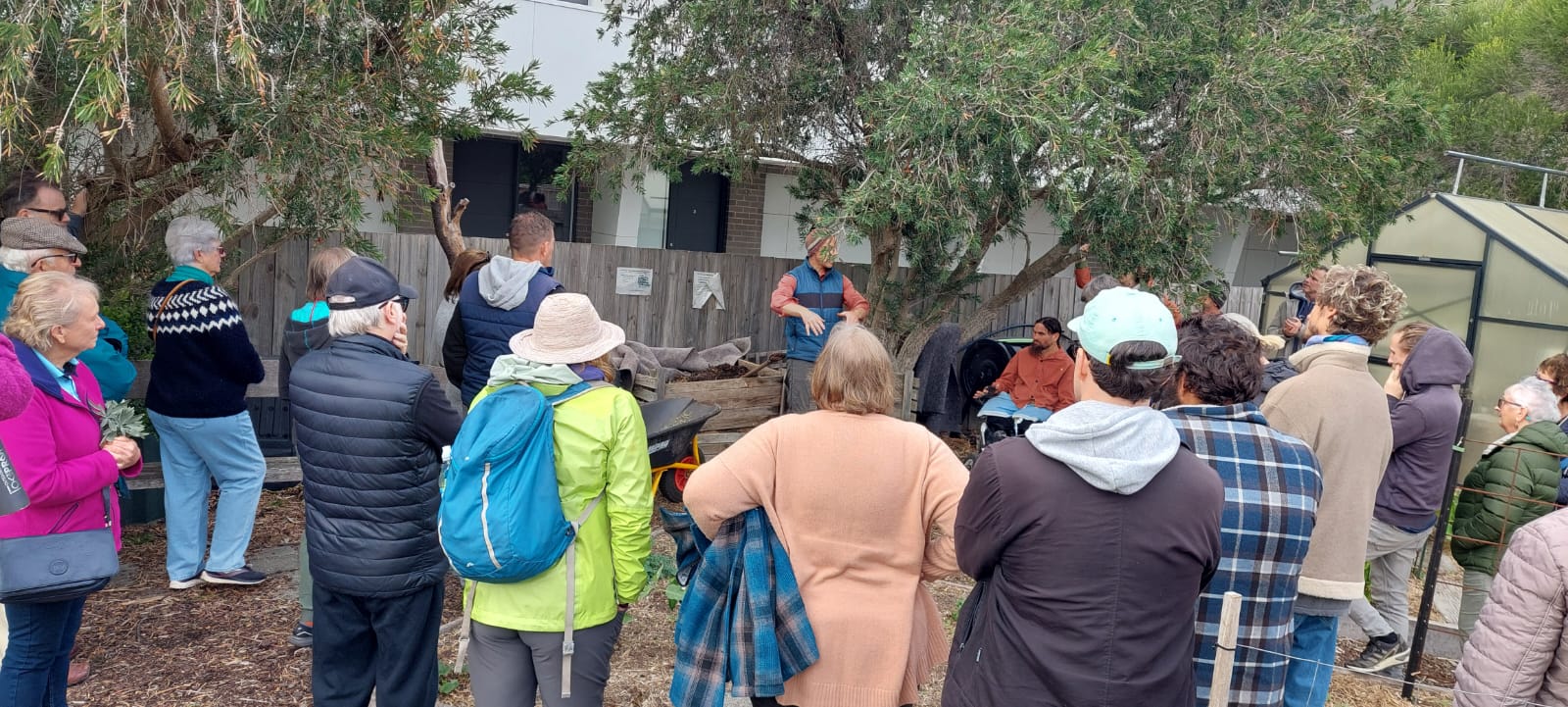
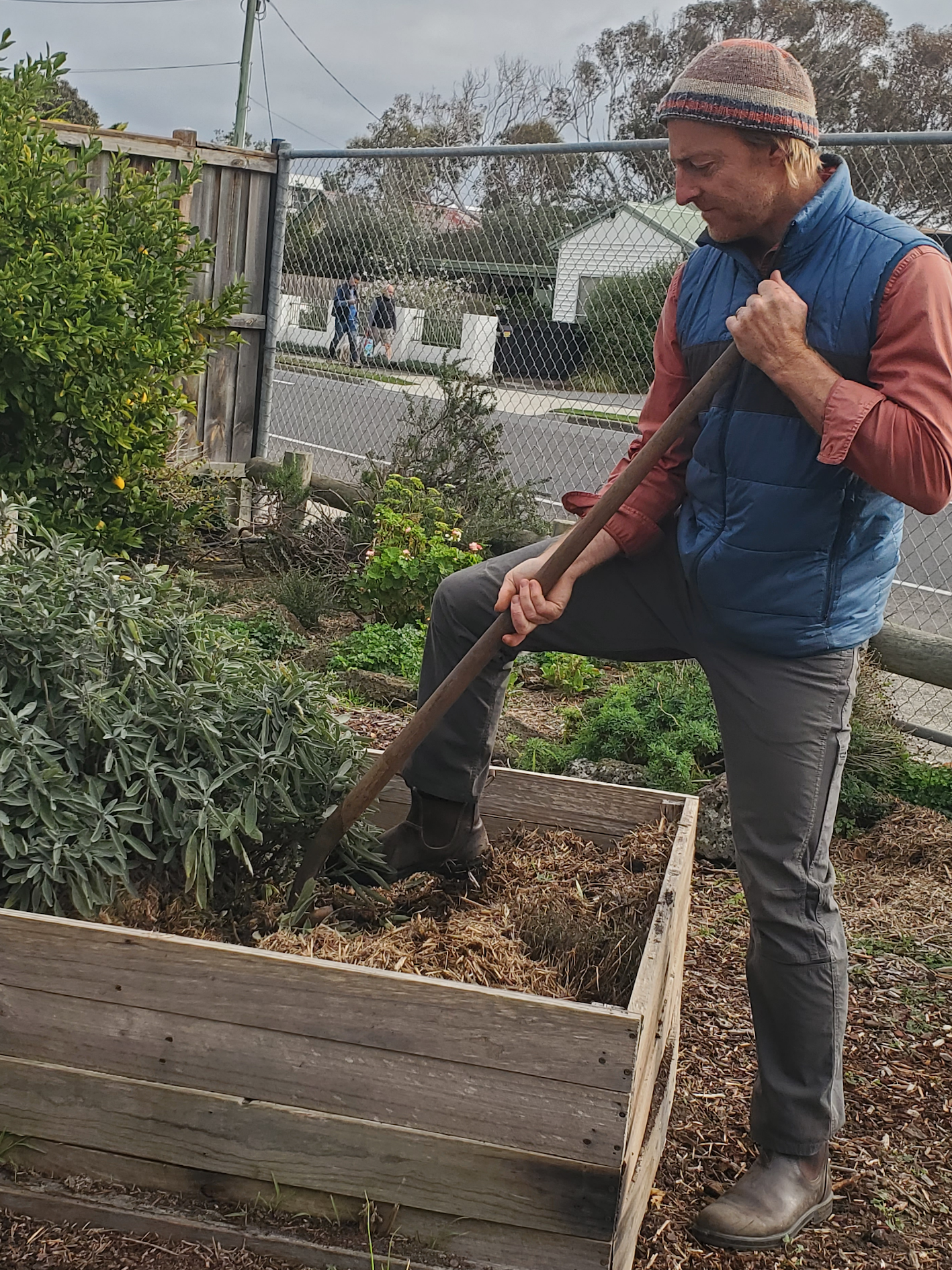
The Garden hosted a free hands-on workshop about soil health, led by permaculture expert Ben Shaw. Ben showed how to build and maintain healthy soil by creating a no-dig garden, plus shared tips about composting and creating a great garden by making the most of what you have around you.
Workshop notes + photos below.
Permaculture tips for great soil
- Diversity is key; use different plants to get soil humming
- Grow things all the time: don’t leave soil bare
- Create compost/soil where your plants are growing. e.g. don’t put compost bins away from garden. Instead, compost IN the garden!
- Gardens need inputs – you always have to bring in carbon and nitrogen. You need to constantly feed the garden
No-dig gardening: Layering
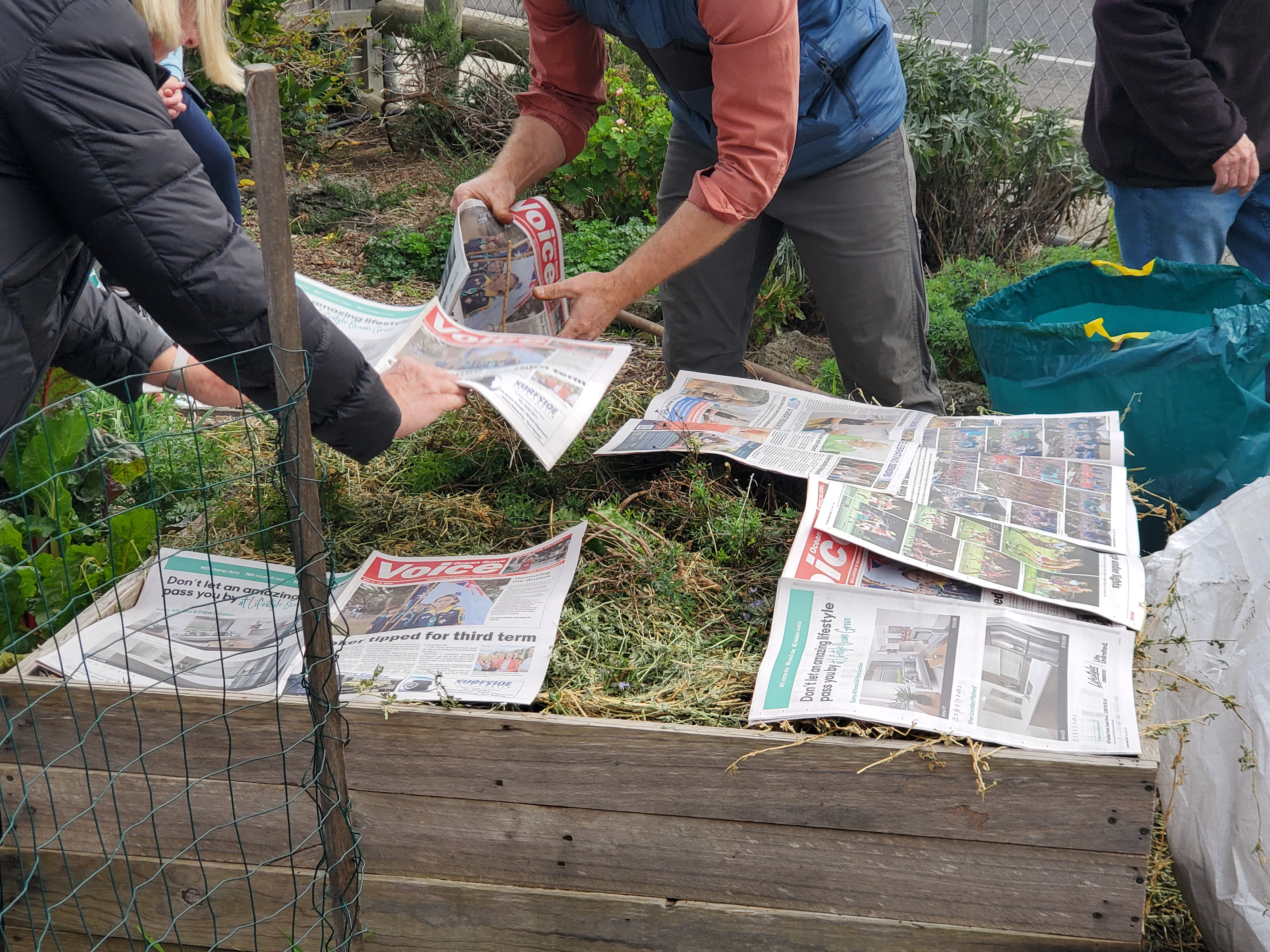
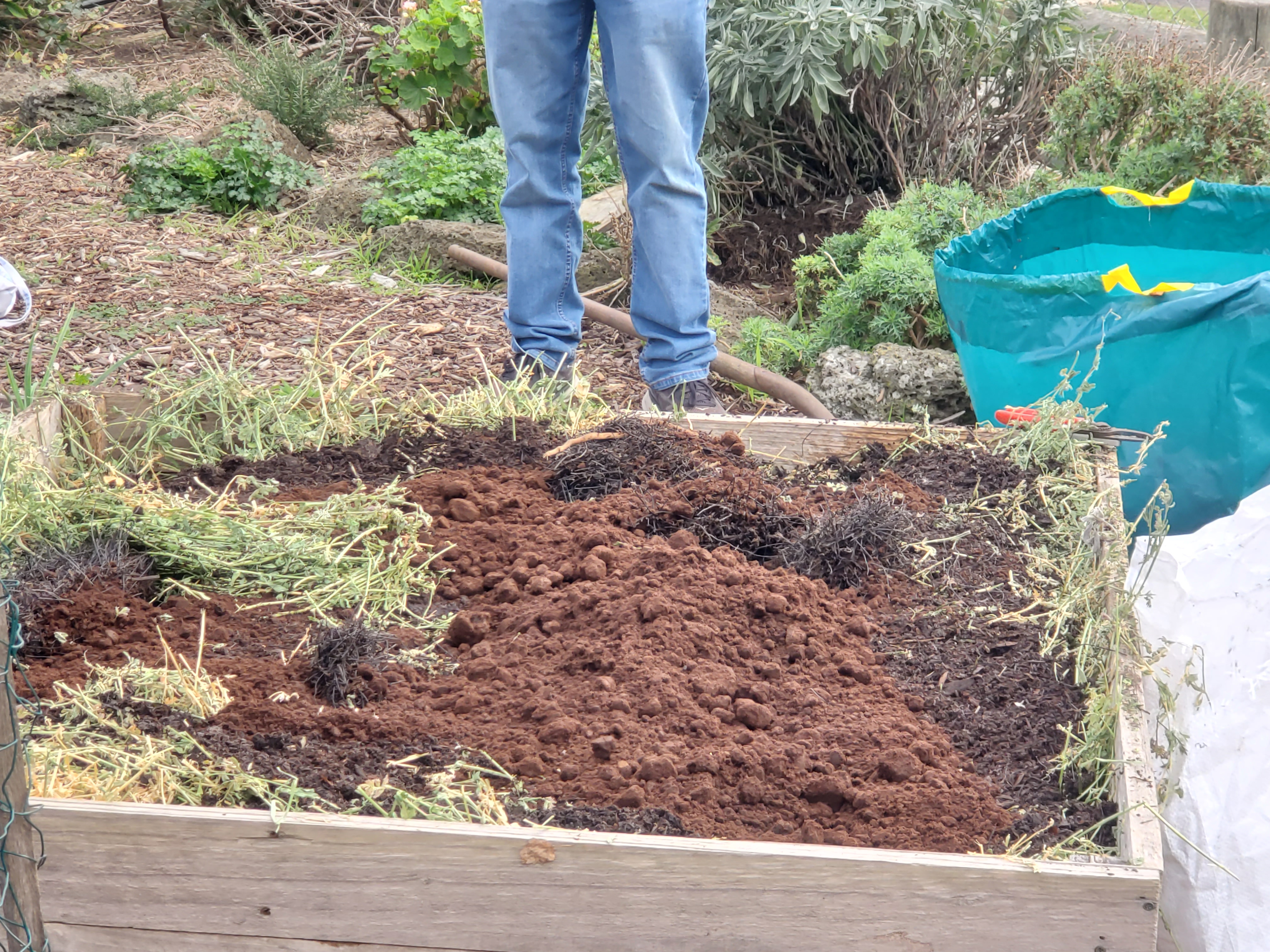
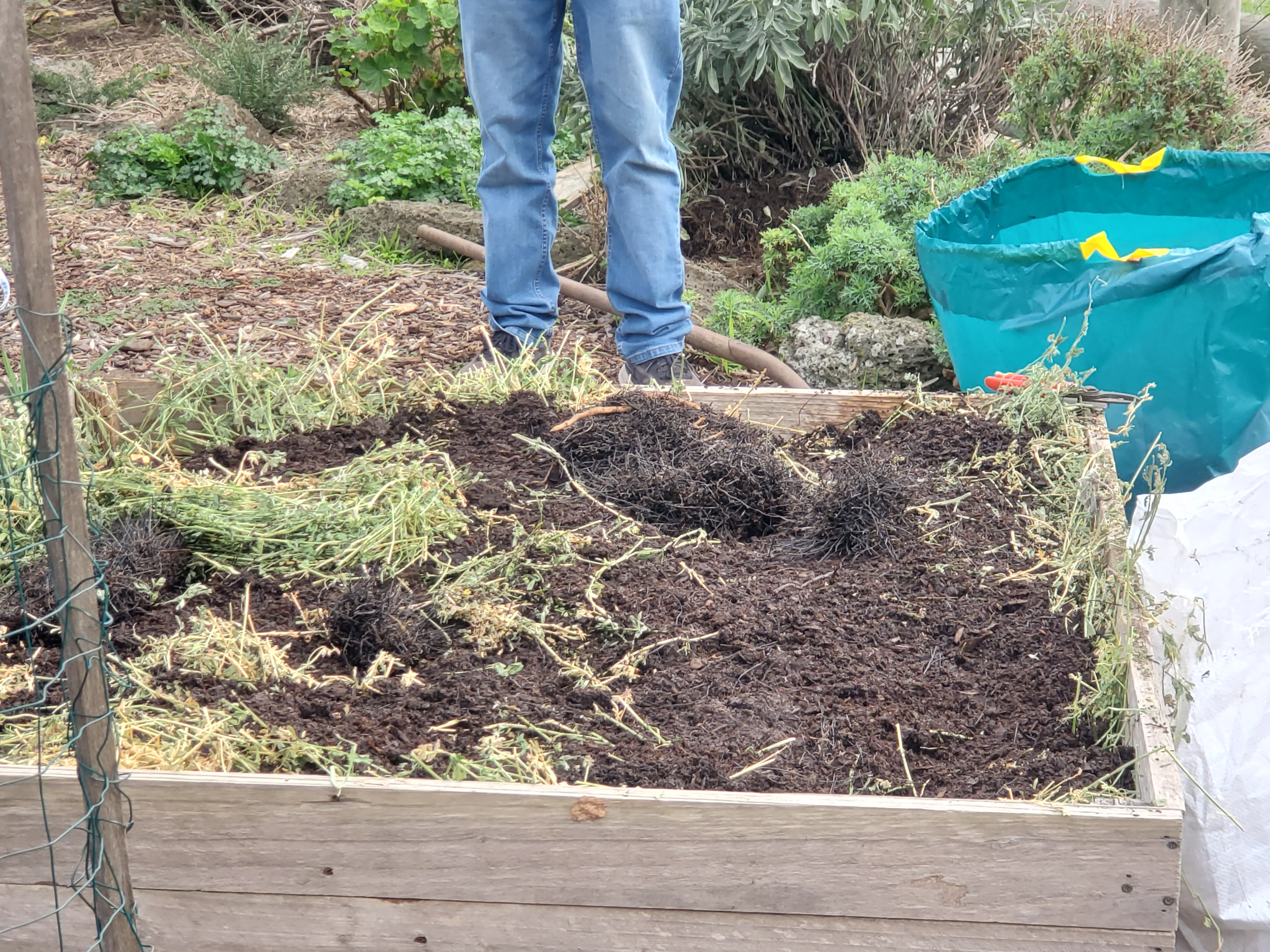
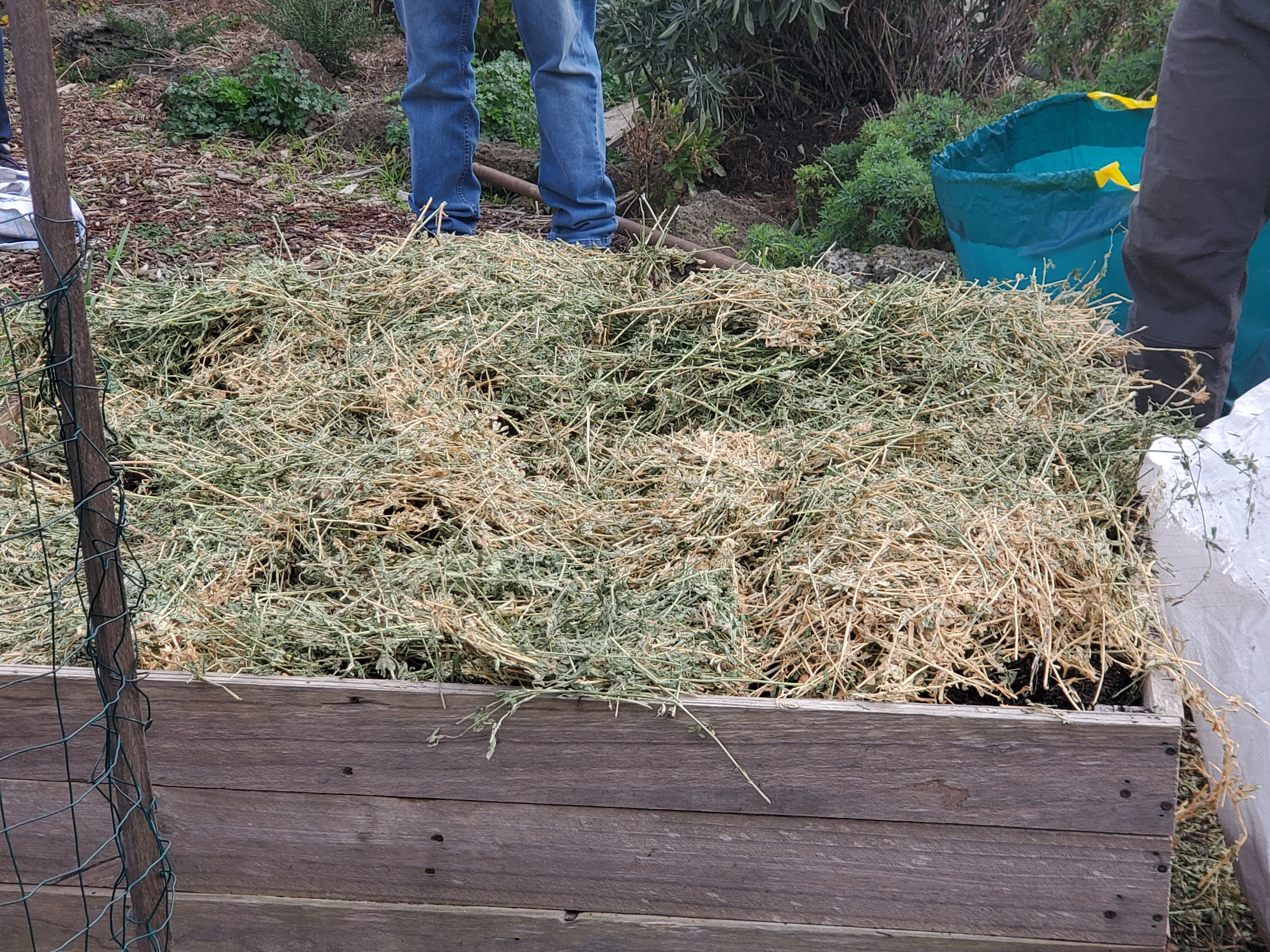
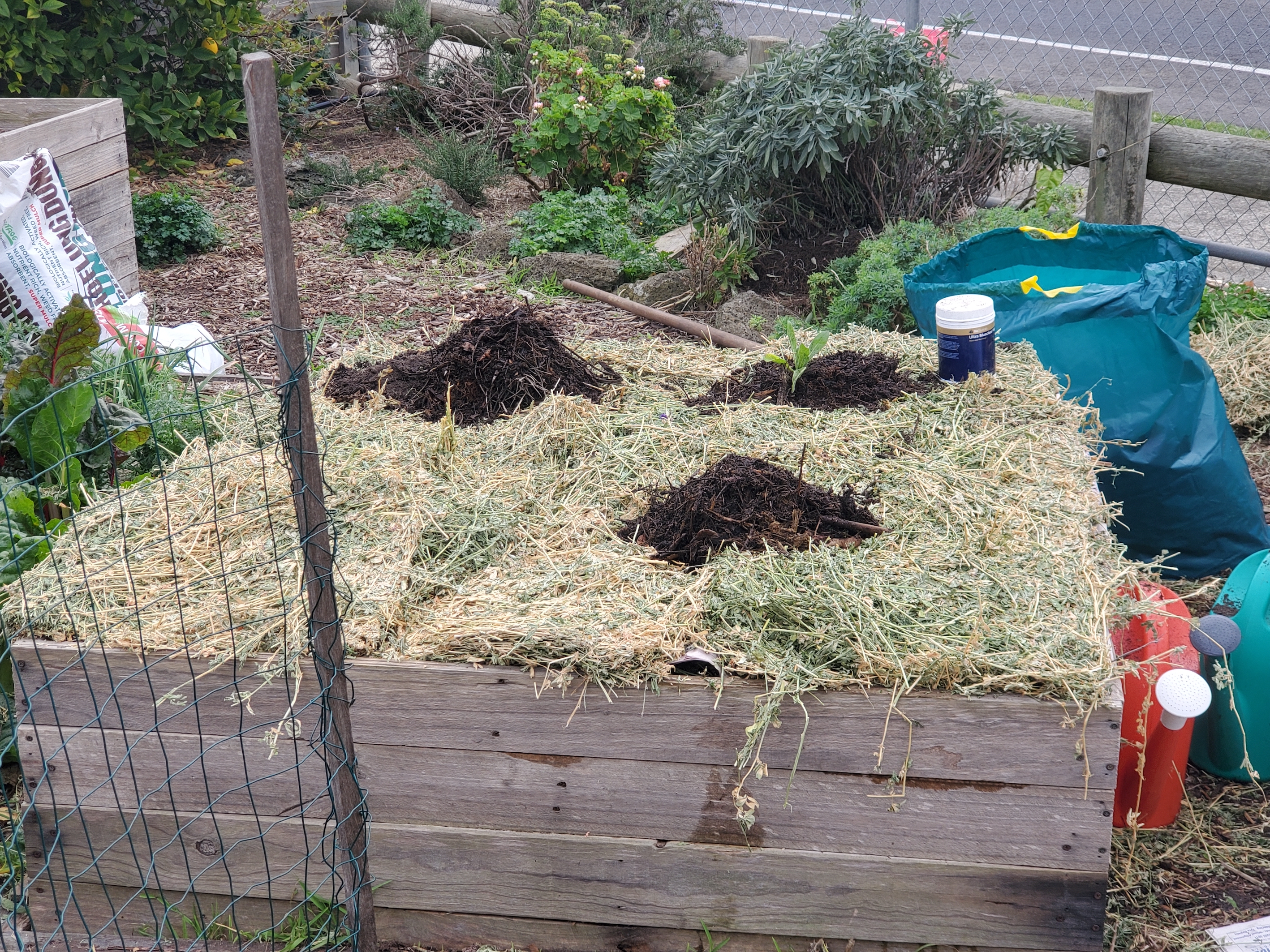
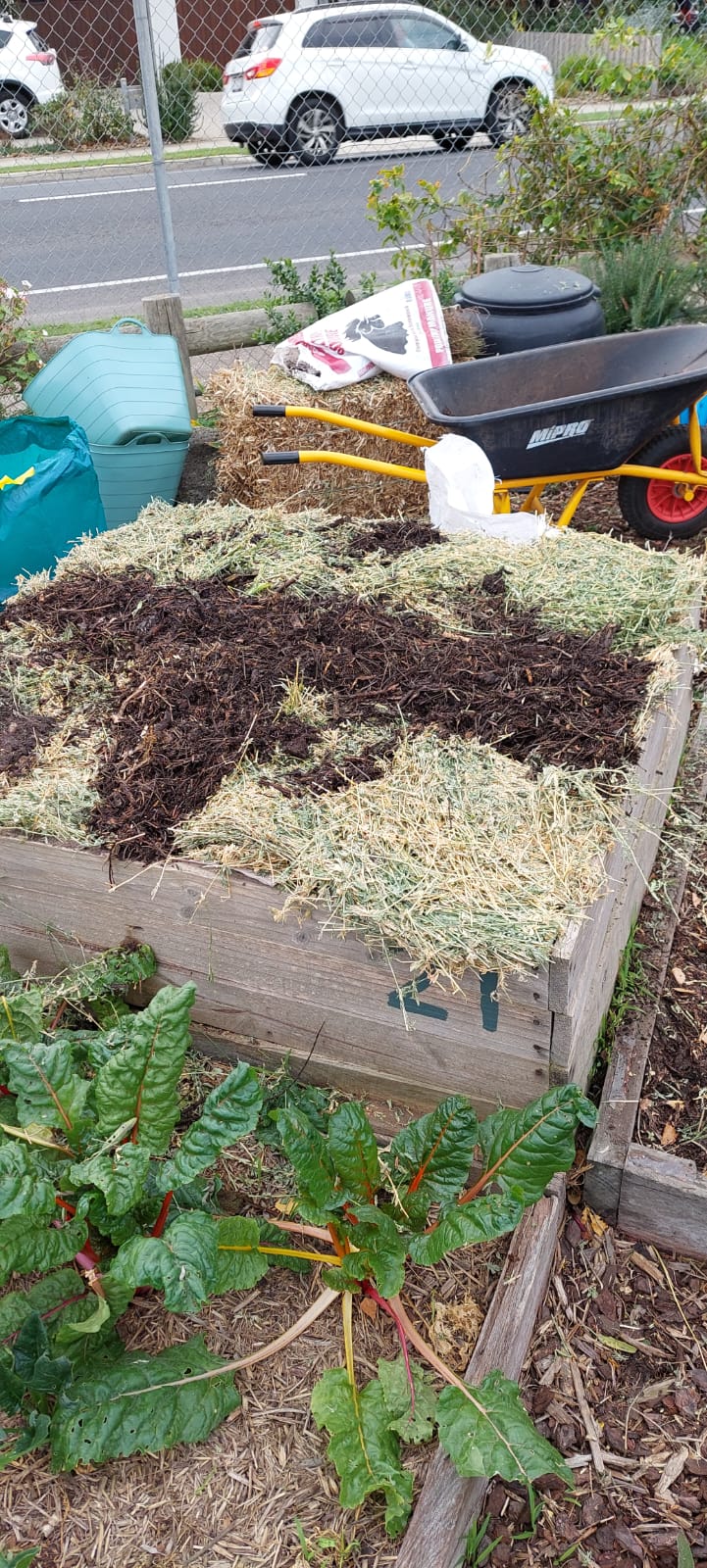
The key to no-dig gardening? Adding layers of diversity with different organic materials. In the workshop, Ben transformed one of the Garden’s boxes from plain old soil to a ready-to-grow rich canvas for the Garden.
Layers:
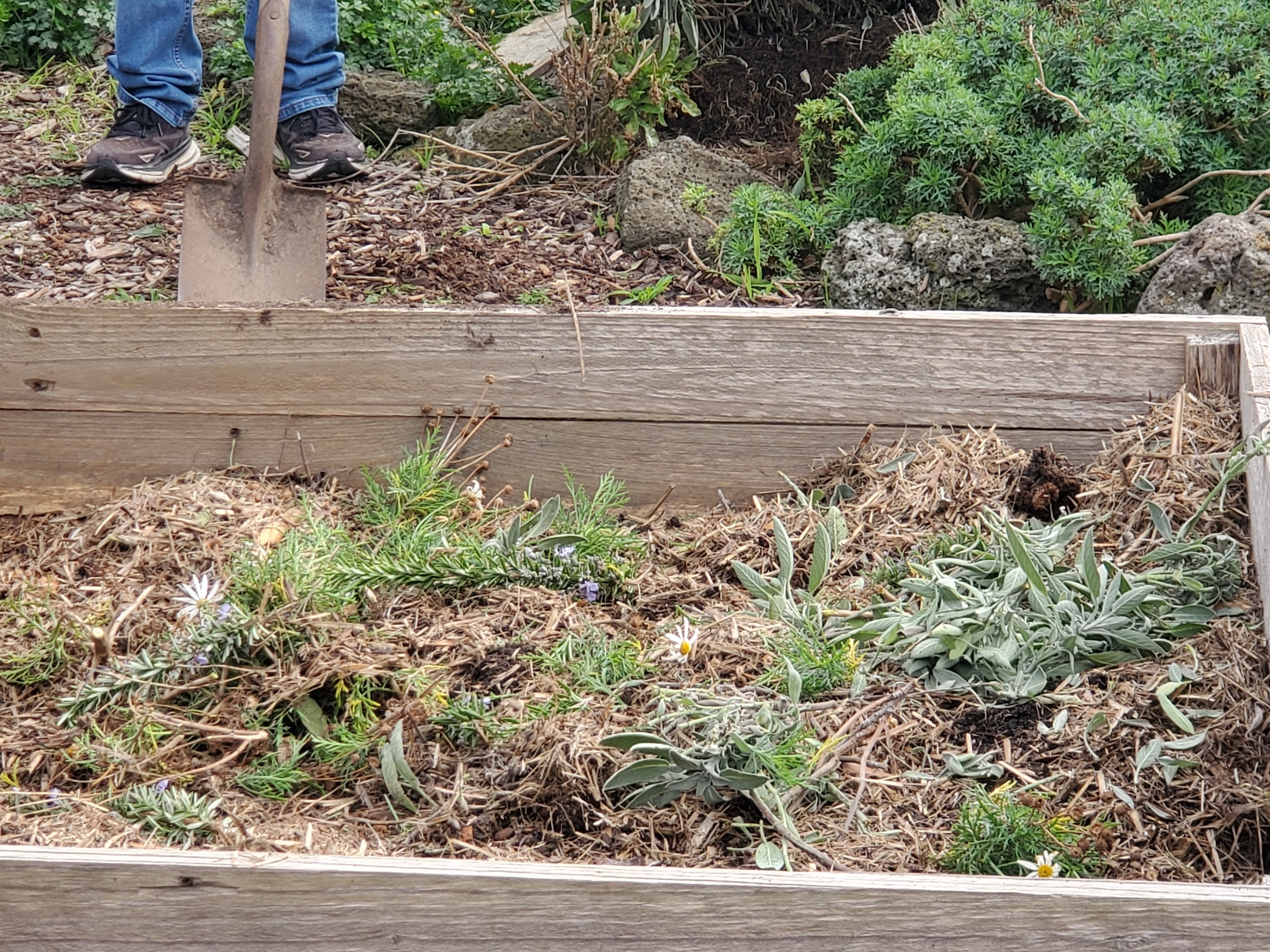
- Start with plants. Chop up herbs, flowers that have gone to seed and add as layers
- Newspaper or cardboard: wet this. TIP: wet before you put it on the patch
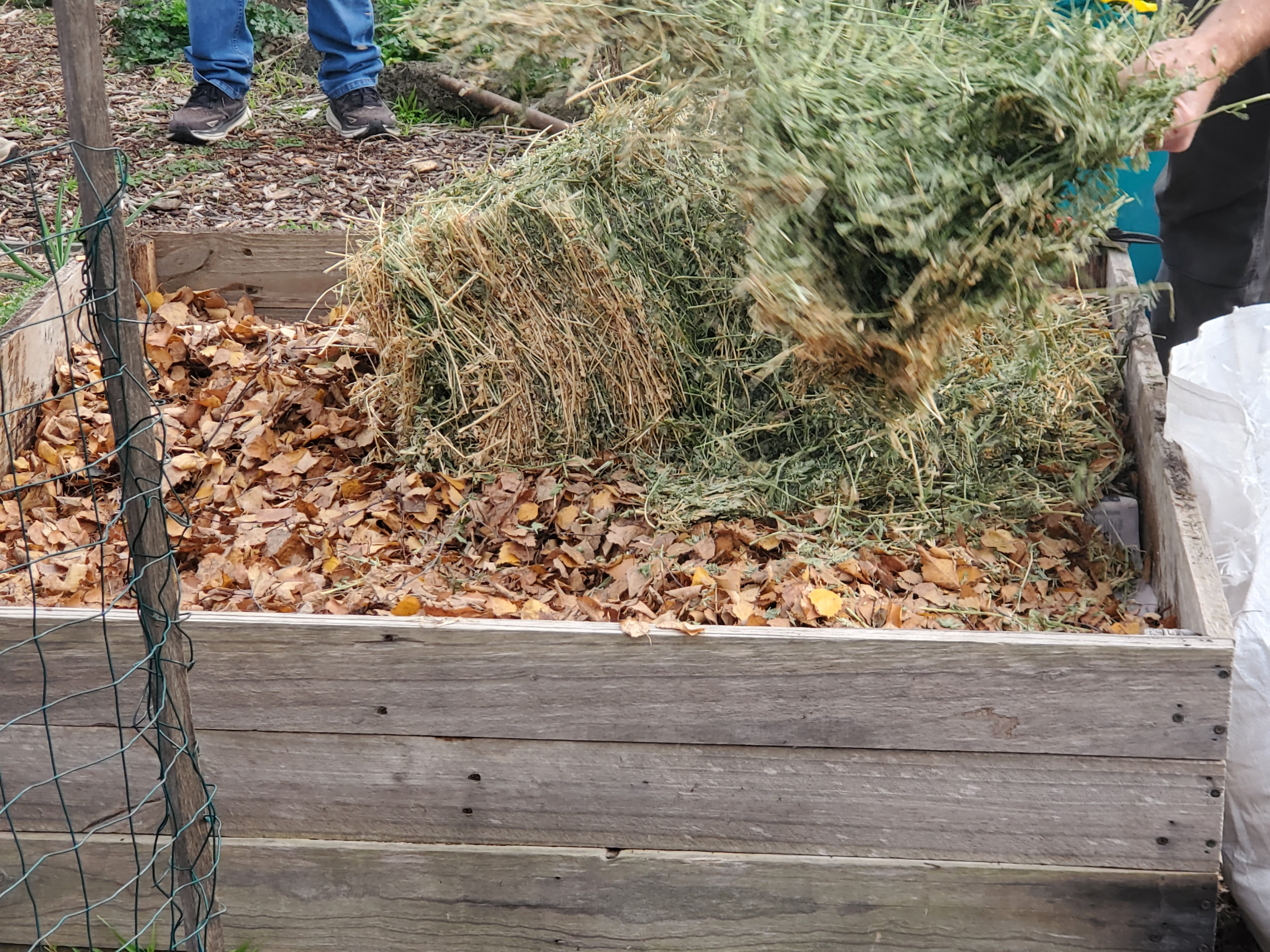
- Dead leaves (not native or eucalyptus)
- Pea straw
- Lucerne straw: super charge with nitrogen
- Coffee grounds
- Sea grass
- Compost. (If not quite ready, still use as a layer)
Top layer: add pockets or a line of compost. Plant seeds/seedlings in that. All you have to do is water: there’s enough nutrition for plants in layers underneath.

Plants
- Think about purpose of plants: put them where it makes sense
- Make the most of your plot: Plant tomatoes and basil together, and add capsicum and eggplant to the same space. When the tomatoes and basil are finished for the year, capsicum and eggplant will still be growing, helping keep your soil healthy
- Follow the 3 sister method to grow corn, beans and squash https://www.theseedcollection.com.au/blog/the-three-sisters-method
- Comfrey: great to chop and drop. But be careful – it can spread.
Herbs
- Grow herbs under fruit trees
- Grow herbs on edge of veg patch
Composting and worm farms
- Put compost bins between fruit trees. They act as slow release fertiliser
- Plastic compost bins: put wire in bottom to keep rats out
- Worms like shade: put on the southern side of your garden
Garden bed design
- There are lots of ways to hold soil in
- Try to create your own space.
- Don’t walk on soil where you want to grow food: this compacts the soil. If you have a big garden bed, create a path where you can walk, ie no planting
Manure
Yes, you can use animal manure in the garden. Before you do:
- Compost horse manure for 3 months before putting on your garden. Why? You don’t know if horse had worms
- Sheep poo: best
- If you can, speak to farmer to understand how they treated their animals
About Ben Shaw
Ben has two decades’ experience working in and designing edible gardens, market gardens and permaculture gardens for individuals and communities. Ben aims to share this knowledge through workshops with families and communities to make our world a healthier place to live. Ben has been working as a permaculturist since completing his Permaculture Design Certificate in 2011.
He has worked on numerous permaculture projects including the establishment of the Basils Farm Winery Garden in Swan Bay, Victoria. Ben has both metro and regional community garden experience, previously being a member of the Collingwood Community Garden and Barwon Heads Community Garden. An advisor to the design and implementation of many community gardens in the Geelong region, Ben has worked in consultation with numerous groups from both the ideation stage through to implementation and monitoring.
Ben has significant experience in planning, designing and implementing a wide range of gardens including community, school and individual business and private gardens. Using a co-design approach, Ben has experience working with diverse groups and individuals.
Find out more about Ben: Ben Shaw, Permaculture
What is permaculture?
Permaculture (the word, coined by Bill Mollison, bringing together permanent agriculture and permanent culture) is the conscious design and maintenance of productive ecosystems which have the diversity, stability, and resilience of natural ecosystems.
It is the harmonious integration of landscape and people — providing their food, energy, shelter, and other material and non-material needs in a sustainable way.
 Community Garden Ocean Grove Inc.