Compost is black gold and vital to the health and vitality of the Garden. Read on for composting tips from Chris, the Garden’s compost connoisseur.
Read our other posts about composting too:
- Egg shells and composting: find out how to compost egg shells (Pro tip: DON’T put them directly in the compost)
- Garden working bee to construct tumblers
Compost do’s
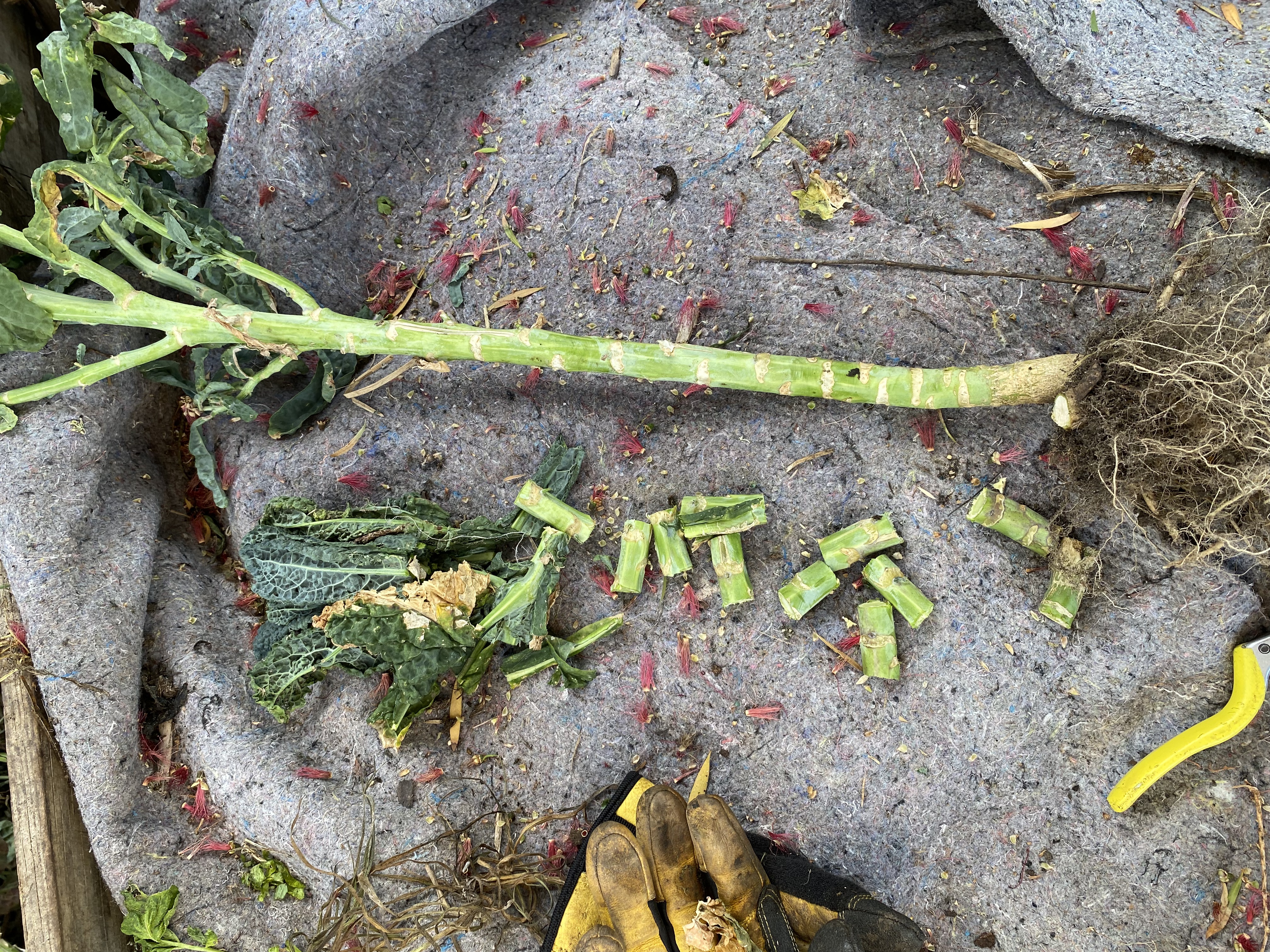
- Smaller is better: always chop green waste small – it will break down faster
- Keep it balanced: Compost needs equal parts green waste (nitrogen) and dried waste (carbon). When you add green, always add carbon: dried leaves, shredded paper, grass or mulch
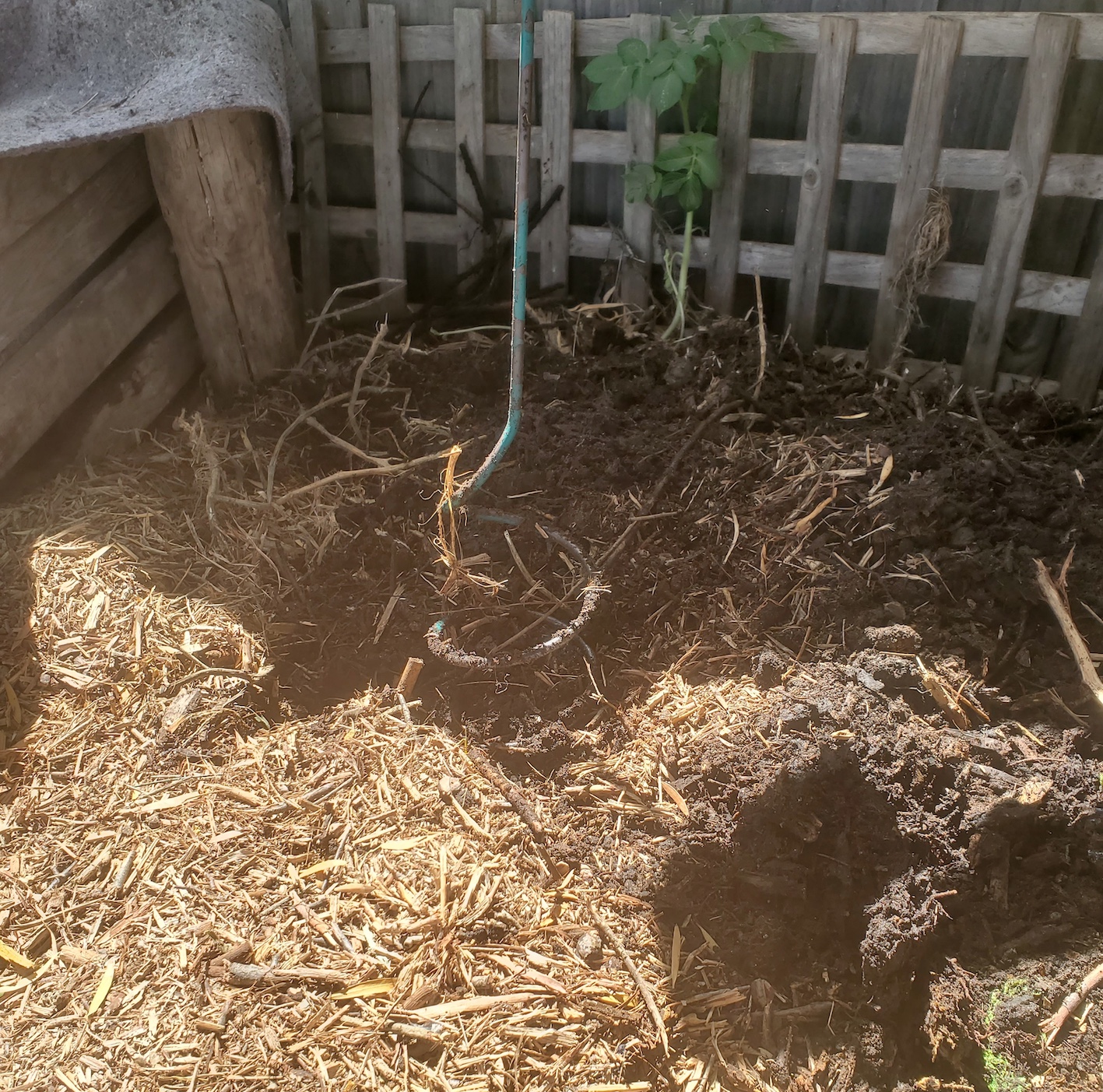
- Compost needs oxygen to decompose: regularly turn it to keep it aerated. Do this with a pitchfork or a compost aerator, a metal tool with a spiral at the end that thoroughly mixes and aerates your compost
- Add water. Don’t let your compost get too dry. Really, do this: your compost should be moist (not wet)
- If you have two bins on the go, fill one, cover and let it decompose and start filling the second bin
Compost don’ts
- No seeds! Don’t add plants that have gone to seed. If you do, your compost will be full of plants grown from the seeds
- No food waste! Fruit and veg scraps only
- No citrus, citrus peel or onion! Add these to your worm farm
- No egg shells! Follow these tips to get the most out of the egg shell/compost marriage
- Plastic ain’t fantastic: only biodegradable waste can break down into black gold
- No pet poo
- No large woody items – they won’t break down. Add these to your council green bin
Compost bin or tumbler? Your choice 🙂
Compost bins and tumblers work in the same way, but a rotating tumbler breaks down compost faster.
- Both need “brown matter” (high in carbon), such as straw, shredded paper, sawdust, and pine needles, and “green matter” (high in nitrogen) e.g., vegetable and fruit waste from the kitchen, fresh seed-free weeds, and fresh grass clippings.
- The ideal ratio is about three to four parts brown to one part green.
- If you add too much green material, composting slows down, resulting in a soggy mess.
- Shredded paper is just the ticket for adding lots of brown matter. If you shred paper for security, use it to feed your compost.
Create your own compost bin
Follow these tips to create your own compost:
- Building a compost bay (Gardening Australia, ABC)
- How to Make a DIY Compost Bin (Better Homes & Garden, US)
Tips for a tumbler: how to manage a rotating compost bin
Tumblers in the Garden are dual-chambered. They’re easy to use and work best if you follow these tips.
- Tumblers have two compartments with sliding doors: one with a ‘+’ symbol, one has a
 symbol.
 - ONLY add compost to the compartment with the ‘+’ symbol.
- Every time you add something, turn the barrel a couple of times.
- Don’t turn too much. This can prevent the compost from heating up and slow down decomposition.
When the compost on the ‘
What to add
You can add green waste and brown materials like raked leaves or sawdust. A good balance of carbon-containing and nitrogen-containing ingredients is important. You can think of brown ingredients as carbon and green ingredients as nitrogen.
Add absorbent materials high in carbon to help the waste compost quickly without getting too wet.
Harvesting compost
Harvest mature compost from the bottom of the bin and use it as a potting mix or mulch.
Composting in the Garden
The Garden has several compost tumblers, plus two big compost bins that provide rich compost for the plots.
Here are Chris’ tips for Garden compost:
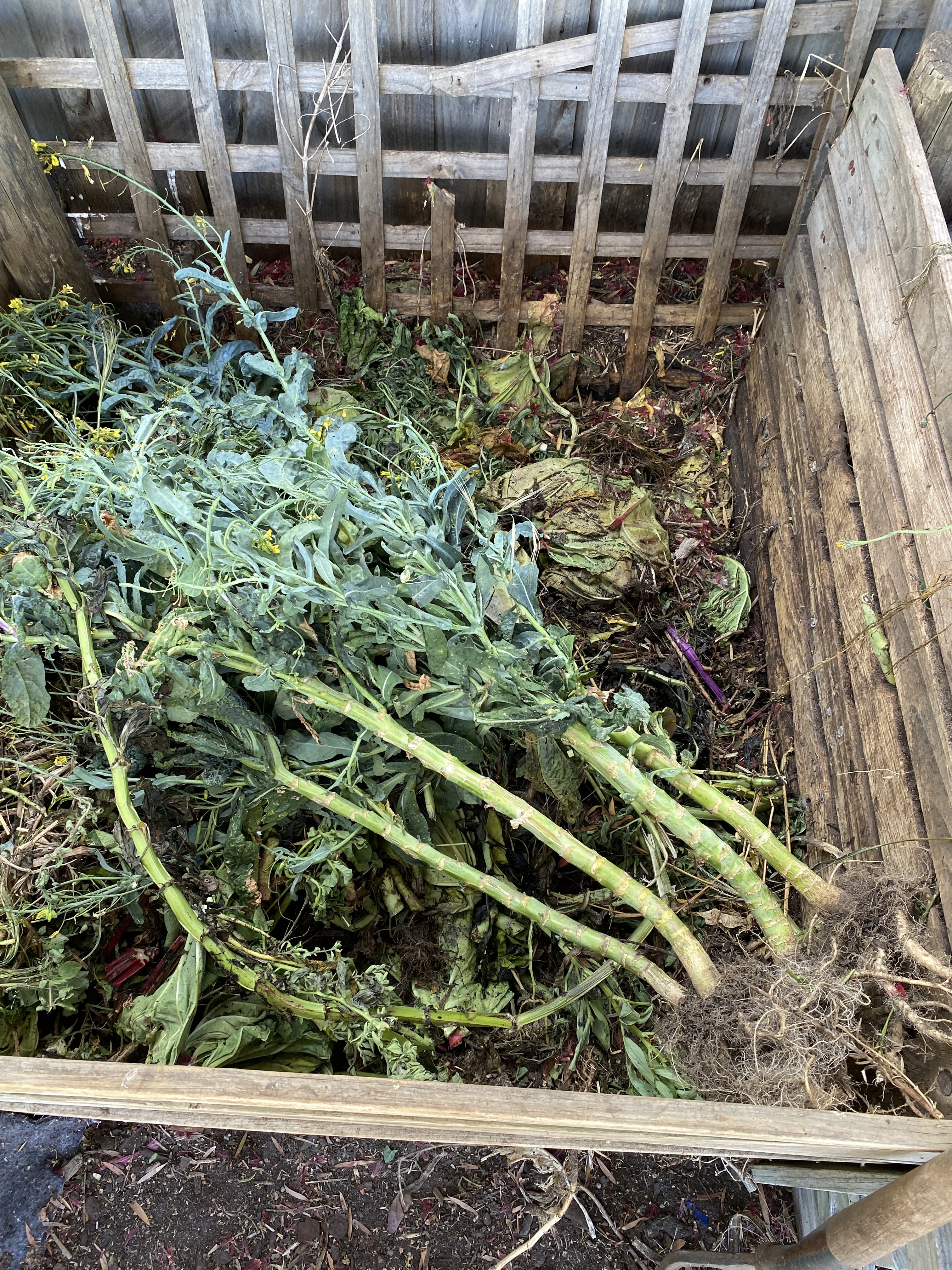
- Small please! See pics above showing what to DO and what NOT to do. The full pieces will take forever to break down: please cut up into pieces!
- Cut up all material into small pieces 2 to 3 inches long before adding to the bins (or tumblers). This means material breaks down more quickly, allowing me to use my aerator more effectively.
- If you can’t cut them up, or don’t have time, please leave it next to the bin and I’ll do it.
- I’ll be down regularly and I will turn the tumble bins and attend to the big bins which includes watering them.
 Community Garden Ocean Grove Inc.